
We build femtosecond lasers that do not yet exist, and use them to reach regimes of light–matter interaction that were previously out of reach.
Our work runs along three connected lines: the laser sources themselves, the terahertz radiation we generate from them, and what happens when light at this power meets matter.
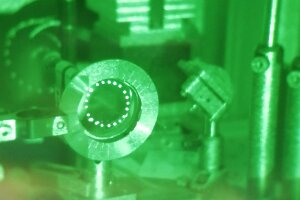
We develop femtosecond laser systems with higher average power, higher pulse energy and access to new wavelengths, exploring new gain materials, resonator geometries and compression schemes. These new sources are what makes the rest of our research possible.
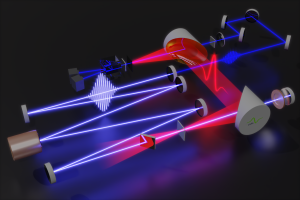
Terahertz radiation penetrates through most materials and couples directly to molecular and collective motions. One critical limit in the immense possibilities of THz science has always been average power. We use our high-power lasers to make THz sources orders of magnitude brighter, develop the detection to match, and put both to work for applications.
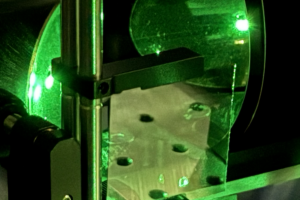
What changes when intense pulses arrive not once, but a million times a second? In many phenomena each pulse leaves the medium different from how it found it, and the next pulse propagates through that difference and keeps changing the material. We study these cumulative effects — and look for ways to make use them to tailor the properties of materials.

Copyright © puls 2026
Last update: Sep 01, 2026